




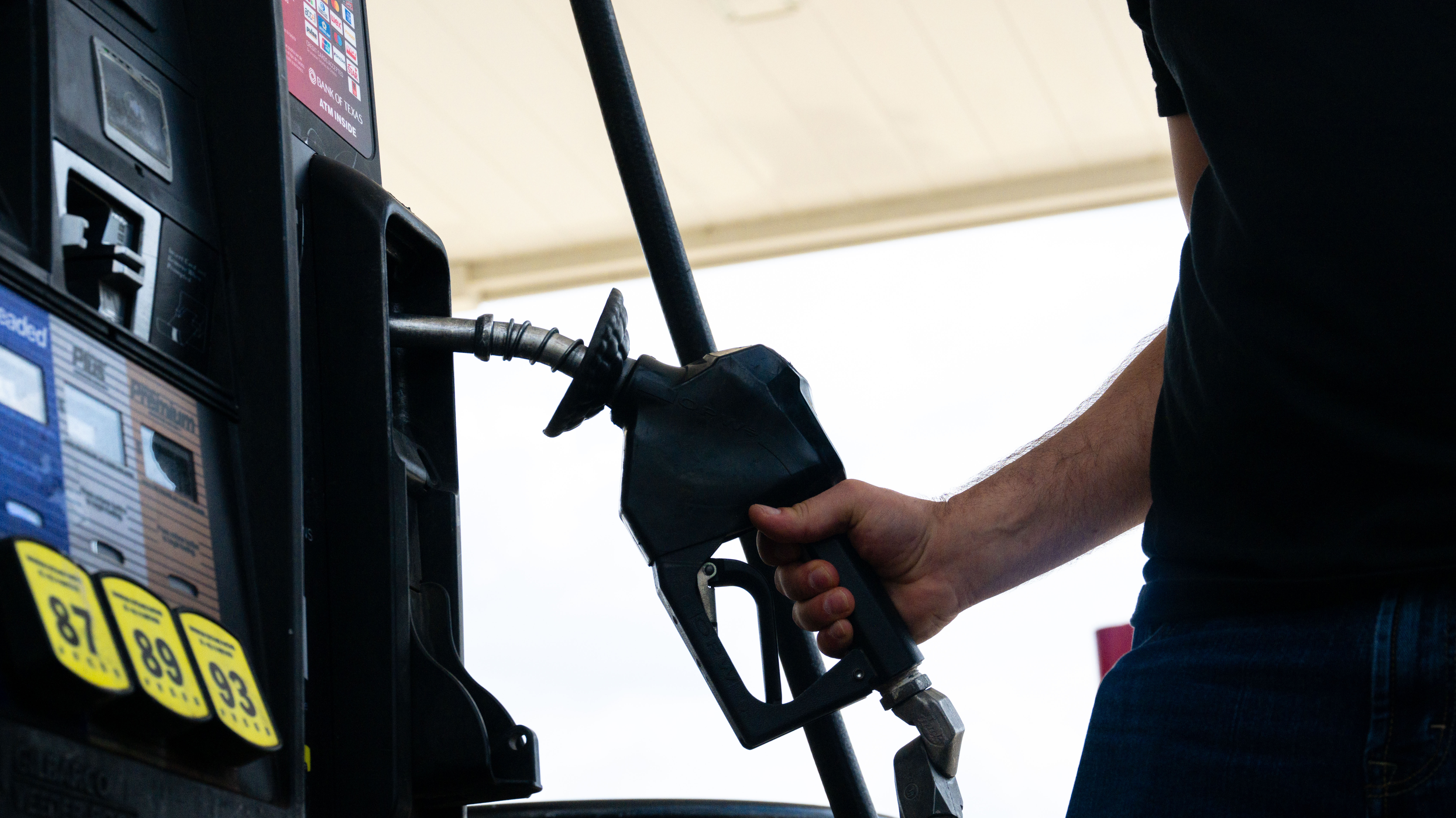
Oil exports from the Middle East have improved substantially in recent weeks, according to a post on X from private tracking firm Kpler, but gas prices still stand above $4.30, and diesel prices remain close to an all-time high.
The supply of oil from the Gulf, excluding Iran, has returned to where it stood before the Iran war, Kpler said last week. Roughly four of every 10 barrels of crude now exit the region without going through the Strait of Hormuz, an adjustment in the oil supply chain, Kpler added.
At the same time, Kpler said on Wednesday, tanker traffic in the strait has improved significantly from a low point earlier in the war, bolstering exports from the region.
The apparent disconnect between a recovery in oil supply and stubborn fuel prices has drawn attention from analysts. The dynamics behind gas prices have garnered added urgency as the United States hurtles toward midterm elections in less than a month.
"Aren't we all trying to figure that out?" Dominic Pappalardo, chief multi-asset strategist at Morningstar Wealth, told ABC News.
Analysts who spoke to ABC News attributed persistently high gas prices to lingering disruption in the region, which has forced firms to take up costly means of transporting crude and pass along those expenses to retailers.
Oil traders, meanwhile, question the staying power of newfound Middle Eastern supply, keeping crude prices higher than the level of oil flow may otherwise suggest, they said. Investors fear a potential resumption of large-scale fighting in the strait or attacks on oil infrastructure in the region, some analysts said.
Plus, analysts added, gas prices typically drop at a delayed pace in response to any reduction in oil prices, in part because it takes time for retailers to sell through refined product purchased while oil prices were at higher levels.
"When prices are fluctuating, gas stations want to protect their profit margin. They don't want to cut prices too quickly," Christopher Tang, a professor of supply chain management at the University of California, told ABC News.
The U.S. -- the world's largest oil producer -- imports a small amount of crude from the Middle East. Since oil and gas are sold on a global market, however, the shortage has sent prices rising for everyone, including U.S. drivers.
A large-scale U.S.-Israeli attack in the winter prompted Iran's closure of the strait, resulting in the largest oil supply shock ever recorded. Oil prices surged, catapulting inflation to its highest level since 2023.
Alternative trade routes in the region helped ease the fallout, but exports remained well below pre-war levels until recently.
To be sure, oil prices have dropped in recent weeks as supply blockages have eased. The West Texas Intermediate futures price, the benchmark index for U.S. trading, stands at about $92. That figure amounts to a roughly 9% drop since Sept. 15. The price, however, remains more than 40% higher than pre-war levels.
Oil prices account for a large share of the price of gasoline and diesel. The average price of a gallon of gas in the U.S. currently registers at $4.36, marking a decline of about 21 cents over the past month, according to AAA. Still, gas prices stand 46% higher than pre-war levels.
Even though oil supply from the Gulf has mostly recovered, the cost of transporting crude still exceeds pre-war levels, attaching new expenses to the product as it moves through the supply chain to refiners, retailers and ultimately drivers, some analysts said.
Tankers have undertaken ship-to-ship transfers as a means of evading possible attack. The cost-intensive maneuver involves direct transfer of oil from one ship to another while the two are at sea, handing off the crude to a flagged ship that carries less risk. After exiting the strait, for instance, one ship may pass oil to another.
Another source of added cost: Some tanker captains are garnering higher pay as they face increased danger, the Financial Times reported earlier this week. Some captains are receiving base salaries as high as $100,000 a month, as well as a $50,000 bonus for each trip, the outlet found. Typically, regular pay for captains is $15,000 per month, according to the FT.
"Transportation costs are still quite high. Bear in mind, the war is still going on," Tang said. "The crude oil is moving, but the price is much higher than before the attack on Iran."
The persistence of high gas prices traces in part to uncertainty about the path forward for the Iran war, some analysts said.
An alternative trade route in the region, Saudi Arabia's East-West pipeline, underscores jitters felt in oil markets.
The pipeline carries as much as 7 million barrels of oil each day, about 5 million of which are exported, Aramco CEO Amin Nasser said in May. Oil exports transported through the pipeline amounted to roughly 5% of global supply.
The pipeline temporarily closed last month, however, after an attack carried out by Iran-aligned Houthi militants. Oil exports through the pipeline were restored to 5.8 million barrels a day earlier this week, Reuters reported.
Still, some analysts said, concern remains about potential Houthi attacks on the pipeline or tankers in the nearby Bab el-Mandeb Strait, which feeds into the Red Sea.
"Markets hate uncertainty. If there’s this overall feeling things could get bad again very quickly, we're seeing that market price that in," Hugh Daigle, a professor at the University of Texas at Austin who studies petroleum, told ABC News.
Copyright © 2026, ABC Audio. All rights reserved.